
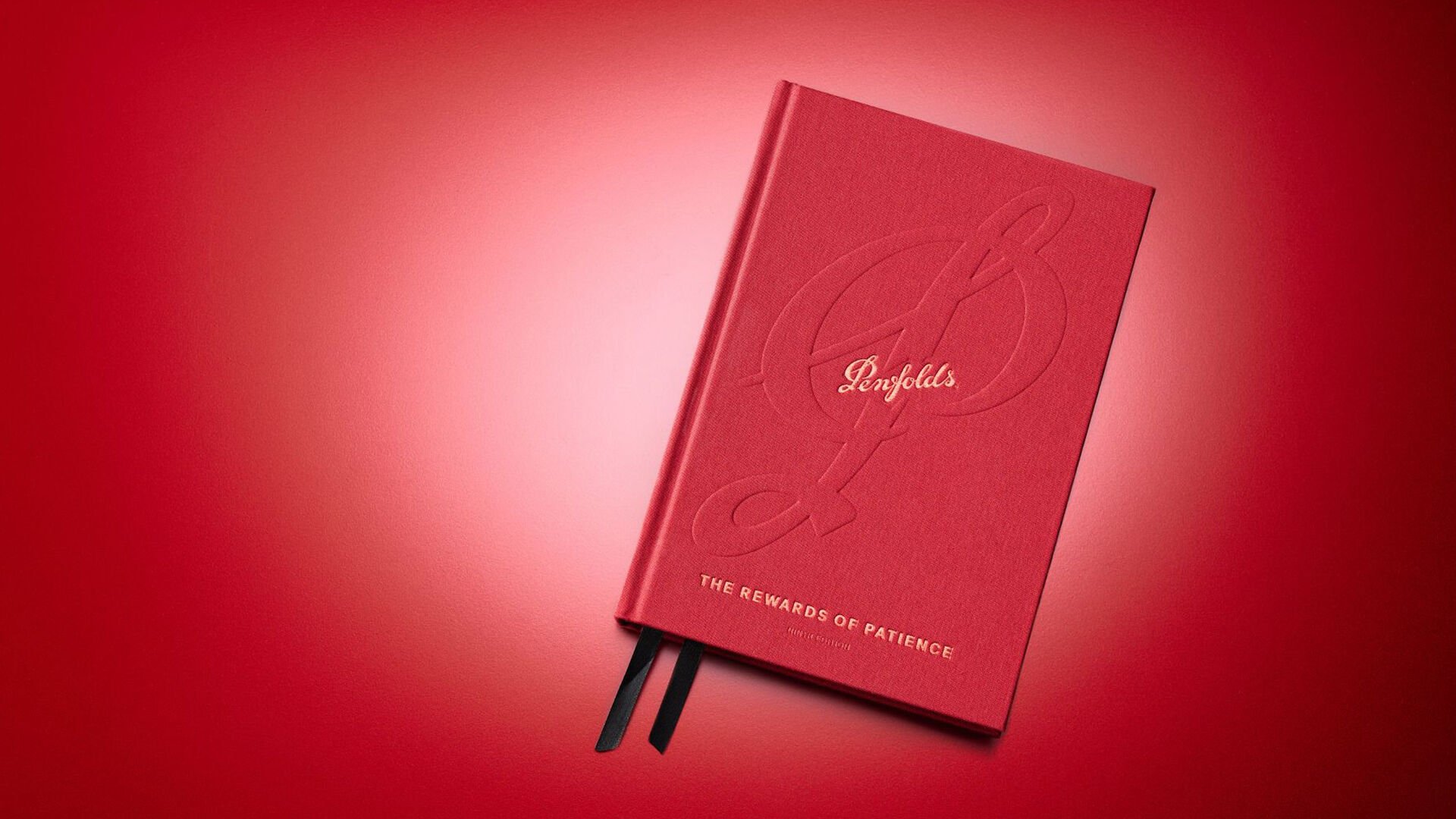
Penfolds corporate history and tasting guide, published 2026, winner of the Wine Communicators Australia Award for Best New Wine Book, 2026.
The short answer
A professionally researched company history is usually commissioned rather than created in-house, and the process involves the organisation engaging a specialist publisher, who brings together a writer, archival and oral history research, editing and proofreading, picture research and rights clearance, design, indexing, and printing.
For a substantial hardback to mark a 25th, 50th, 70th, or 100th anniversary, 12–18 months from the start of the contract to delivery is a realistic amount of time. It is always recommended to allow for delivery of the completed book at least one month prior to the anniversary even, or launch.
Longueville Media, a Sydney custom publisher founded in 2002, has spent more than two decades producing exactly this kind of book. Our institutional, corporate, and commemorative histories include Penfolds, Seppeltsfield Wines, the NSW Personal Injury Commission and other NSW Government Departments, the Australian Department of Foreign Affairs and Trade, Griffith University, and the Lowy Institute for International Policy.
The detail below provides an overview of how such a professional commemorative history project unfolds.
Who is the book for, and what is it meant to do?
This is the most important question.
A history written as a gift for staff, stakeholders, or long-standing clients differs from a history intended for sale through bookshops, or for presentation to government or donors. The question Who’s it for? shapes the book’s length, style, tone, number and type of illustrations, whether it is a paperback or hardback, the print quantity, and other critical aspects such as whether the manuscript needs a legal review before it goes to press.
In our experience, it helps to identify one person in your organisation to drive the project from the outset. You will no doubt have internal stakeholders who need to have input on the work, but a history created by a committee will inevitably be delivered late and result in a bland work. From our experience, a book with a single accountable person leading a small review group usually arrives on time and with a style that fulfils its original intention.
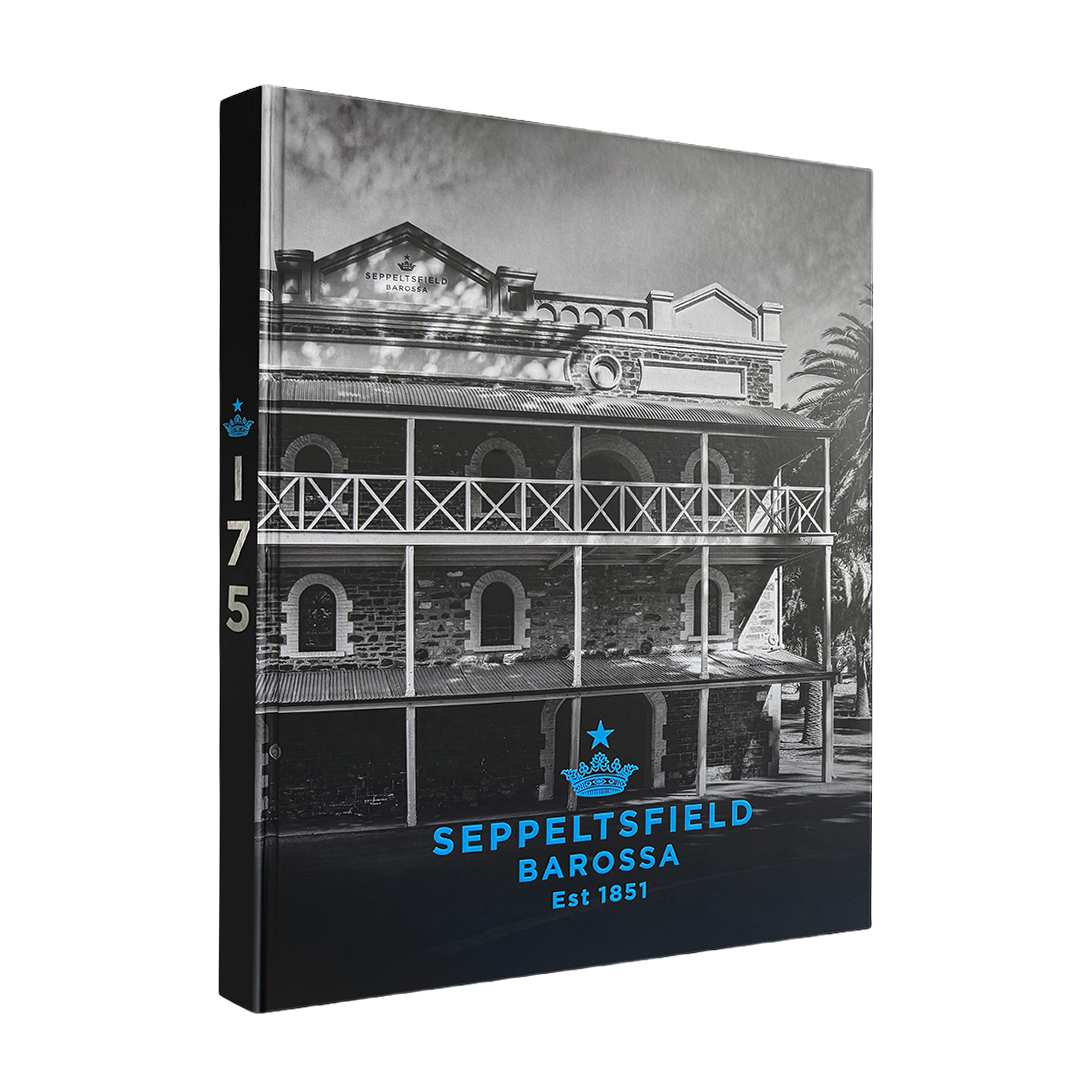
Seppeltsfield 175
Client: Seppeltsfield Barossa
Year: 2026
Overview: This large-format hardback coffee table book presented in a slipcase (42 x 33cm) was commissioned to capture the definitive history of this iconic Australian wine estate as it turns 175.
Editorial and content includes:
A history of the estate over 175 years – placing it in the context of the Barossa Valley and South Australia broadly.
Charts the rise of the estate as powerhouse of winemaking across two centuries.
Features stunning landscape photography specially commissioned for the book.
Includes detailed reproductions of archival images from the Seppelt family, the Seppeltsfield archives, the State Library of South Australia, and the National Library of Australia.
What do we include in our commemorative history book?
This depends on the answer to the question of Who is the book for?, but in broad terms, you might use any of the following sources:
board minutes
annual reports
correspondence
staff newsletters
photographs
business plans
press coverage
These documents help provide a chronology of an organisation’s past activities; however, we often find they don't provide a sufficiently complete picture to create an engaging story.
Depending on the nature and location of your organisation, the engaging personal interest angles come from other areas such as:
interviewing past employees, or other people with a connection to the organisation to capture their recollections, photographs, and anecdotes;
research for material in the public domain, such as via the National Library archive, Trove (https://trove.nla.gov.au);
local sources where the company began operating, such as historical societies, local council archives, other community groups, or your state library.
Interviews that provide an oral history record create the human perspective and atmosphere that images and documents alone lack, such as motives, atmosphere, and decisions that were argued over in corridors and never documented. Interviews with founders, former chairs, long-serving staff, customers, and community members should be recorded, transcribed, and obtained under a signed release that allows them to be quoted in the book, since the recordings themselves often become an archive of lasting value to the organisation.
Who writes it, and how is the manuscript reviewed?
Depending on the scope and depth of the history required, the author may be a writer, a trained historian, a journalist, or an experienced ghostwriter. The most important quality is that you have someone able to distil a mass of institutional material into an engaging story that an outsider would choose to read.
A good commemorative history is not a catalogue of chief executives and building openings but an account of how an organisation responded to its environment over time, the pressures it faced, and its successes and hurdles. It should provide independence and transparency by acknowledging the highs and lows all organisations face; otherwise it risks becoming just another marketing document rather than a true history with real value to all concerned.
The final edit and review is an important part of the process. We generally plan for a detailed editorial review of the full manuscript (primary text, captions, timelines, appendices such as lists of office holders) to cover fact checking of names, dates, and figures, a copyedit, and proofread to house style. Where living people or commercial disputes are discussed, a legal review may be required.
What goes into the design and production?
A commemorative anniversary history is usually a keepsake object as much as an historical text, kept on boardroom shelves and presented to guests and VIPs, so its physical presentation requires the same attention as its content.
We always produce this type of book with section-sewn hardback binding, a well-chosen archival paper that does justice to historic photographs, and a cover that will still look authoritative and professional in 20 years.
Image files are often supplied at screen resolution or in the wrong format for commercial printing, which means additional time and budget are required to source and scan the originals before the book reaches the printing stage. This licensing and high-resolution scanning process has a cost, which is often overlooked in budgets, so we always raise this issue up front: Each photograph, map, or document reproduced needs its source identified and permission rights cleared, whether it comes from the organisation's own archive, a former employee, a newspaper library, or a public domain collection.
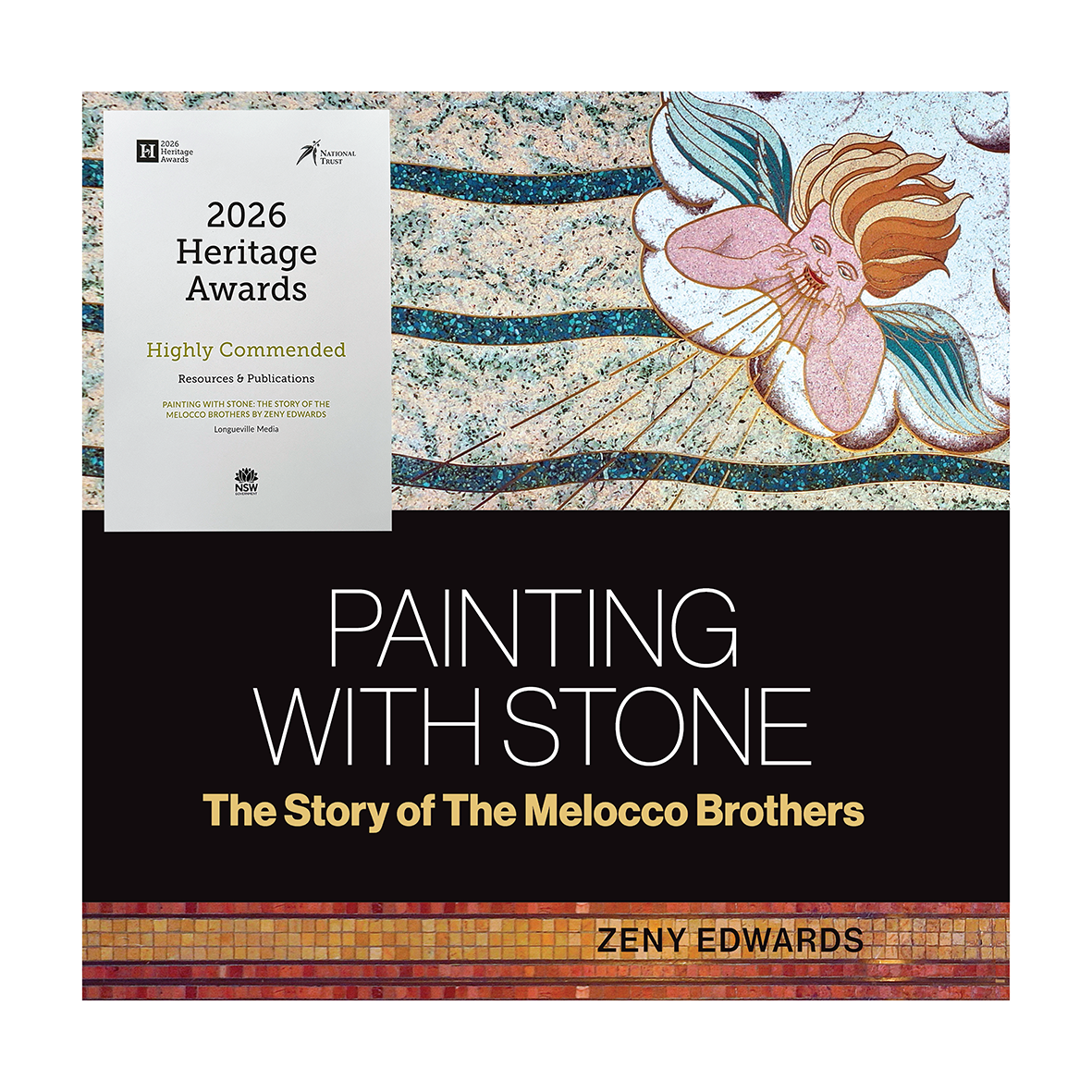
Painting with Stone
Client: The Melocco Family
Year: 2025
Overview: This book was commissioned by the Melocco family to tell the story of the three Melocco brothers. The work of ‘Melocco Bros’ is woven into Australia’s architectural heritage. Through mosaic, terrazzo, sgraffito, and scagliola, the brothers transformed their adopted city after migrating from northern Italy to Sydney in 1908.
Editorial and content includes:
Tells the story of the three Melocco brothers’ arrival in Australia, business establishment, and legacy in Australia.
Features stunning architectural photography specially commissioned for the book.
Includes detailed reproductions of archival images from the Melocco family archive, the State Library of NSW, the National Library of Australia, and other local resources in Sydney.
Highly Commended in the NSW National Trust Heritage Award in 2026.
What are the publishing obligations in Australia?
Commercially published books carry an ISBN (International Standard Book Number), which allows them to be catalogued through the National Library's Prepublication Data Service (formerly Cataloguing-in-Publication). Once printed, it falls under the legal deposit scheme, which requires a copy to be deposited with the National Library of Australia and, if published in NSW, with the State Library of NSW, the NSW Parliamentary Library, and the University of Sydney Library. In recent times, this deposit may be made with a digital edition. While this is a legal requirement, its primary benefit is to preserve the history as part of the national public record.
If the client wants the book sold as well as presented free, Longueville Media can distribute it to Australian booksellers or through our distribution partner, offer it for sale on our website, or, in some cases, offer it as a print-on-demand publication or an e-book.
How long does it take?
Twelve to eighteen months is typical for a researched hardback of 200 pages or more, of which research and writing occupy roughly the first two-thirds and editing, design, proofing and printing the remainder. Offshore printing, where it is chosen for cost or specification reasons, adds eight to 12 weeks of sea freight time.
Shorter commemorative books, or those built largely on an existing archive and a smaller interview programme, can be delivered in nine to 12 months.
Custom commemorative histories cover such a diverse range of styles, lengths, and print quantities that it is difficult to estimate a meaningful cost. However, some cost examples include:
Writing of a fully researched history by an experienced professional historian (based on the Professional Historians Australia rate card) would typically cost $2000–$4000 per week of research and writing.
Printing a luxury-style large-format hardback book might cost anywhere from $15–$50+ per copy, depending on the level of embellishment, the dimensions, and the number of pages.
How should you choose a publisher?
Ask to see finished books, rather than viewing PDFs (paper, binding, and colour reproduction cannot be judged on a screen), check reviews or testimonials, and look for awards or other public recognition the publisher has received for their work.
Be transparent about and discuss your project requirements, deadline, your internal approvals, and other processes openly, so that the publisher can gauge exactly what is required and advise you on handling the project under your specific circumstances.
A publisher that can show a body of comparable work, explain plainly how your book will be researched, written, designed, and printed – and can provide a written schedule based on your launch date – provides you with the security that they have the appropriate experience.
Recent Longueville Media histories have received several awards, including a State Library of NSW Regional and Community History Award, National Trust Heritage Awards (Australia), and the Gourmand Award (Europe), André Simon Award (UK), OIV Award (Europe), and two Australian Wine Communicator Awards for its wine industry histories.
About Longueville Media
Longueville Media is an independent custom publishing house in Sydney, Australia, established in 2002 by David Longfield, whose publishing career began at Oxford University Press Australia in 1992. The house specialises in commissioned institutional, corporate, and commemorative histories and in specialist non-fiction, taking a project from initial scoping through research, writing or ghostwriting, editing, design, print management, and national distribution through Simon & Schuster. Clients have included the NSW Government, the Department of Foreign Affairs and Trade, Penfolds, Seppeltsfield Wines, the NSW Personal Injury Commission, Griffith University, and the Lowy Institute for International Policy.
To discuss an anniversary history, contact Longueville Media via our contact page.
Frequently asked questions
How far ahead of an anniversary should we start?
Eighteen months to two years before the launch date is comfortable for a fully researched hardback; 12 months is workable if the archive is in reasonable order and decisions are made promptly.
Can our own staff write the history?
They can contribute a great deal, particularly in locating records and identifying interviewees, but an independent writer brings a useful level of objectivity and distance that helps a history be seen as credible, rather than simply promotional. It is also a time-consuming task to run in-house.
Do we need an ISBN if the book is not being sold?
An ISBN is not compulsory for a private edition, but it makes the book discoverable in library catalogues and booksellers.
Should the history acknowledge difficult periods?
Yes. Readers, including the organisation's own staff, may take a dim view of a history that omits difficulties that they remember. If a book is going to a public audience, then you run the risk of media criticising the book for delivering a sanitised perspective.
Can the book be sold in bookshops?
Yes, provided distribution is arranged four to six months in advance of the release date.
